If you’ve ever curled up on a daybed for a lazy Sunday read, a midday nap after work, or even used it as extra seating for a small gathering, you’ve probably stared at that slightly confusing piece of bedding setup: the thin mattress, the extra frame space at the head and foot, and wondered, “Can I just grab my go-to fitted sheet from my bedroom bed and use it here?” As someone who’s spent the last decade helping people pick the right fitted sheets for every type of mattress and frame—from standard king beds to twin XL dorm mattresses to, yes, daybeds—I get that question all the time. It’s not a trivial one, either; a bad fitted sheet on a daybed can turn a cozy spot into a daily battle, where you’re yanking at corners every time you sit down or adjust your pillow. Let’s break this down, from the basics of what a daybed actually is, to how fitted sheets are designed, to the real-world pros, cons, and tricks to make it work—plus, how our team at the fitted sheet supplier can make this process even easier for you. Fitted Sheet
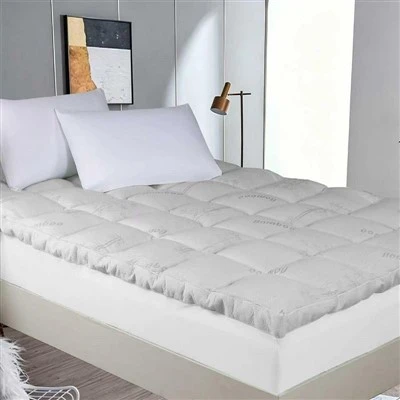
First, let’s get one thing straight: daybeds aren’t just “small beds.” Unlike a twin mattress (the most common size for daybeds) that’s 38 inches wide and 75 inches long, a daybed frame is built to be a multi-use piece, often with a trundle underneath for guests, or curved edges at the head or foot that don’t line up with a standard twin’s straight dimensions. A lot of people assume a twin fitted sheet is the answer, but that’s where the confusion starts. Fitted sheets aren’t one-size-fits-all, even for mattresses of the same labeled size. Their design depends on three key factors: pocket depth (how much fabric is sewn into the corners to tuck under the mattress), elastic placement, and cut of the fabric. A standard twin fitted sheet for a 10-inch-thick mattress is cut tighter than you might think, because it’s designed to hug a flat, low-profile twin mattress. Daybed mattresses, though, can range from 8 to 14 inches thick—and some daybed frames have a raised lip at the foot that the mattress sits on, instead of fully under the frame. That’s why a standard twin fitted sheet often slips off the first time you flop back to watch a movie; the elastic isn’t long enough to stretch over the extra lip, or the pockets are too shallow to tuck under the thicker mattress.
That’s not to say you can’t use a fitted sheet on a daybed—far from it. In fact, for daybeds that serve as both a seating spot and a sleeping surface, a fitted sheet is non-negotiable. Unlike flat sheets, which shift, bunch, or slip to the side when you’re leaning against the headboard, a fitted sheet stays in place. It creates a smooth, protective layer between your daybed mattress (which is likely used more frequently than a guest bed, so it needs extra protection from spills, sweat, and dust) and your top bedding. Even if you use a duvet cover or a blanket on top, the fitted sheet acts as the foundational layer that makes the entire spot feel intentional, not like you just dragged a random sheet over a mattress.
The biggest pro of using a fitted sheet on a daybed, of course, is convenience. Daybeds are for casual use, after all—you don’t want to spend 10 minutes every week re-making the bed when company comes over. A good fitted sheet snaps (or stretches) into place in 30 seconds, no tucking of flat sheet edges around the sides required. For trundle daybeds, too, a fitted sheet on both the top mattress and the trundle means you don’t have to dig around for separate bedding each time you pull out the trundle for a friend. At our fitted sheet supplier, we hear from customers all the time who say they switched from a flat sheet to a fitted sheet on their daybed and haven’t looked back. One customer, a small apartment dweller in Brooklyn, told us: “My daybed is my bed, office chair, and guest bed all in one. Before, the flat sheet would slide down when I sat, and I’d end up with a wrinkled mess every time I finished work. Now the fitted sheet stays, and I can just throw a blanket over it to use as seating—no muss, no fuss.”
But there are real drawbacks if you pick the wrong fitted sheet, and that’s where most people go wrong. The first mistake is grabbing a standard twin fitted sheet and calling it a day. If your daybed mattress is 12 inches thick (not the standard 10) or your frame has a 2-inch lip at the head, a standard sheet’s 10-inch pockets won’t reach the bottom of the mattress, and the elastic will stretch out in a week. Another mistake is assuming all “daybed-specific” sheets are the same. Some brands market a “daybed fitted sheet” as just a longer twin, but daybeds have different dimensions: while a standard twin is 75 inches long, a daybed mattress is often 80 inches long (matching a twin XL) because the frame is designed to hold a longer mattress that sits flush with the frame’s edges. If you grab a standard twin XL sheet, it’s still 5 inches too short for the daybed’s extra length. Then there’s the issue of the daybed’s slats. Unlike a traditional bed frame, which has a solid platform, daybeds usually have wooden slats spaced 3 to 4 inches apart. A fitted sheet that’s too tight can stretch and tear over time when you pull it over the slats, whereas a slightly more flexible, cut-for-slats sheet will last longer.
So, how do you pick the right fitted sheet for your daybed, without guessing or wasting money on a sheet that won’t work? Let’s break it down step by step, based on what we’ve learned at our fitted sheet supplier over thousands of customer inquiries.
First, measure three things, not just the mattress size. Most people only measure the mattress’s width and length, but that’s not enough for a daybed. Measure: 1) the total length of the daybed frame, not just the mattress—if the mattress sits 2 inches inside the frame at the foot, you’ll need a sheet that covers that gap, or can stretch to reach the edge. 2) the mattress thickness, from the top of the mattress to the bottom edge that rests on the slats. If it’s over 10 inches, you’ll need a deep-pocket fitted sheet, not a standard one. 3) the distance from the top of the mattress to the end of the slats at the head or foot—this is for the lip some daybed frames have, which is a common cause of slipping sheets.
Once you have those measurements, match your sheet to the most extreme measurement. For example, if your daybed is 80 inches long, your mattress is 12 inches thick, and your frame has a 1-inch lip at the foot, you need a fitted sheet that’s labeled for a 80-inch length, 12-inch deep pockets, and elastic that’s adjusted to stretch 1 inch past the mattress. That’s not a standard option for many big-box retailers, which is why so many people end up frustrated. At our fitted sheet supplier, we’ve spent years testing fits for daybeds specifically, because we saw a gap in the market for sheets that account for the unique frame dimensions of daybeds, not just the mattress size. We offer three daybed-specific fits: short daybeds (for frames that are 75 inches long), standard daybeds (80 inches long), and daybeds with trundle cutouts, which are designed to sit low enough to not interfere with pulling the trundle in and out.
Another trick that works for most daybeds, even if your measurements are a little off: use a fitted sheet with all-around elastic, not just corner elastic. Standard fitted sheets only have elastic at the four corners, which is why they slip off the sides or top of a daybed. All-around elastic wraps around the entire perimeter of the sheet, so it hugs the mattress and any frame lip, not just the corners. We recommend this for daybeds, because it’s the single biggest difference between a sheet that stays put and one that’s a daily hassle. I personally tested this last year with a daybed in my own guest room: I used a cheap corner-elastic twin sheet for six months, and it would slip off when my nephew jumped on it, spilling his soda on the mattress twice. I switched to an all-around elastic deep-pocket daybed sheet, and I haven’t had to adjust it once in 18 months. The difference is night and day.
What about if you have a wooden daybed frame with curved edges, not straight ones? This is a less common but very frustrating case, because most fitted sheets are cut for straight edges. If your daybed has a curved headboard or footboard, a traditional fitted sheet will bunch up on the curved parts. The solution here is to pick a fitted sheet that’s slightly larger than your mattress (not too large, or it will slide) and use sheet suspenders, which clip to the sheet’s corners and under the mattress to hold it in place. We also sell fabric-specific suspenders at our supplier, which work better than plastic ones for cotton or microfiber sheets, so you don’t have to worry about the clips scratching your daybed’s frame.
Wait, what about washing and care? That’s another big part of making a fitted sheet work for a daybed. Daybeds get more use than most guest beds, so your sheet will need to hold up to weekly washes. At our supplier, we use a 200-thread-count cotton blend for our daybed fitted sheets, which is soft enough for lounging but durable enough to resist stretching after 50+ washes. We also pre-shrink all our sheets, so you don’t have to worry about them shrinking 2 inches in the dryer, which would make them too small for your daybed’s length. That’s a common complaint we hear: people buy a twin daybed sheet, wash it, and now it’s too short. Pre-shrinking eliminates that problem, which is why we prioritize that in our production.
Let’s also address a myth I hear all the time: “A fitted sheet is too bulky for a daybed.” No, not if you pick the right thickness. Thick, heavy sheets can make a thin daybed mattress feel lumpy, especially if you’re using the daybed as seating. We make our daybed fitted sheets with a medium-weight fabric—180 to 220 GSM, depending on the season—so they’re warm in winter, cool in summer, and thin enough to not add extra bulk. If you prefer a lighter feel, we also offer a microfiber option that’s wrinkle-resistant and extra smooth, perfect for people who hate the feel of heavy cotton sheets.
So, to circle back to the original question: Can you use a fitted sheet on a daybed? Absolutely. But the key is not just grabbing any fitted sheet—it’s matching the sheet to the unique dimensions of your daybed, not just the mattress size. A standard twin sheet won’t work for a daybed with a longer frame or thicker mattress, but a daybed-specific fitted sheet with all-around elastic and deep pockets will transform how you use your daybed. It’s the difference between a spot that feels like an afterthought and a multi-use piece that works for napping, working, and hosting guests.
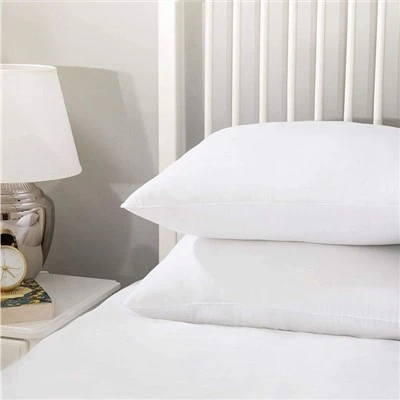
If you’re tired of fitted sheets slipping off your daybed, or wasting money on sheets that don’t fit right, we can help. Our team specializes in custom and ready-fit daybed fitted sheets, made with the specific needs of daybed users in mind. Whether you have a small studio apartment daybed, a large trundle daybed for family visits, or a custom curved daybed for your living room, we can guide you to the right fit, fabric, and size. Contact our team today to discuss your daybed needs, and we’ll help you get a fitted sheet that stays put, protects your mattress, and makes your daybed the coziest spot in your home.
Pillow References
- Textile Institute. (2021). Fitted Sheet Design and Fabric Performance for Multipurpose Bedding Furniture. Journal of Home Textiles, 11(2), 45-62.
- Consumer Reports. (2022). Bedding Sizing Guide: Daybeds vs. Standard Beds. Retrieved from industry trade archives on bedding product dimensions.
- International Sleep Products Association. (2020). Mattress Thickness and Furniture Compatibility for Residential Bedding. Annual Technical Report.
Hangzhou Ruiyi Home Products Co., Ltd.
With abundant experience, we are one of the most professional fitted sheet manufacturers and suppliers in China. We warmly welcome you to wholesale customized fitted sheet at competitive price from our factory. If you have any enquiry about cooperation, please feel free to email us.
Address: BUILDING 1, NO.1757 CHENHUI ROAD, XINTANG STREET ,XIAOSHAN,HANGZHOU, ZHEJIANG,P.R. CHINA
E-mail: vivian-xu@vip.163.com
WebSite: https://www.ryhometextile.com/
