If you’ve ever stood next to a Heavy Truck Steyr idling on a sweltering highway rest stop on a summer afternoon, you know how integral its air conditioning system is—not just for driver comfort, but for keeping vital electronics, refrigerated freight, and even engine components from overheating. As a supplier who’s worked with Steyr trucks for over a decade, I’ve spent more hours tinkering with, upgrading, and troubleshooting these AC systems than I care to count, and I’m here to pull back the curtain on what makes a Steyr’s AC tick, straight from the field. Heavy Truck Steyr
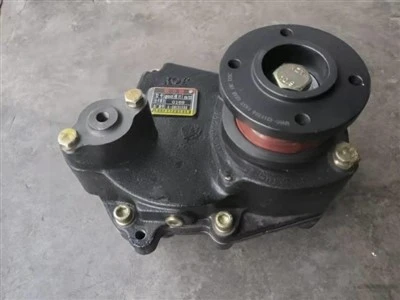
First, let’s clear up a common misconception: Heavy Truck Steyr AC systems aren’t built the same as the ones in your personal sedan. While a car’s AC is calibrated for a 2,000-pound vehicle and a small cabin, a Steyr is a 30,000 to 80,000-pound workhorse that’s often operating in extreme conditions—think desert heat in the Middle East, frigid mountain passes in Central Europe, or dust-choked gravel roads in Eastern Europe. That means its AC is engineered for durability, not just cooling power, with parts that can handle vibration, high loads, and infrequent maintenance between cross-country runs.
The core of any heavy-duty AC is the refrigeration cycle, and Steyr sticks to a proven, heavy-duty variant of this that’s been refined over decades of truck design. Unlike some modern passenger car systems that switch to electric compressors, most production Heavy Truck Steyr models (from the 1990s Legacy series up to the current S line) use an engine-driven compressor. That might sound old-school, but it’s a deliberate choice: electric compressors drain auxiliary power, which is critical on heavy trucks that rely on every watt for ignition, lighting, and telematics. The compressor is belt-driven off the engine’s crankshaft, so it only runs when the engine is running, syncing its power draw to the engine’s RPM to avoid straining the drivetrain during hard pulls.
Now, let’s break down the key components, and where a supplier like us comes in to support them. The compressor itself isn’t a one-size-fits-all part—Steyr specs two main types depending on the truck’s use case: reciprocating compressors for over-the-road models that do long hauls at steady RPM, and rotary vane compressors for construction or off-road Steyr trucks that idle a lot or operate at variable speeds. We stock both variants, because a compressor that works for a cross-border delivery truck won’t hold up to a Steyr 12S used for quarry work, where dust and constant vibration take a toll.
Next is the condenser, the part that sits at the front of the truck, right behind the radiator. On passenger cars, condensers are thin, with small fins to maximize surface area, but a Steyr’s condenser is thick, with wide-spaced fins built to push through dust, bugs, and road debris without clogging. We regularly supply upgraded condensers for customers who run their Steyr trucks in dusty regions—these have reinforced core plates and corrosion-resistant coatings that last 20% longer than stock parts, cutting down on costly downtime. The condenser’s job is to release heat from the refrigerant, so if it gets clogged with debris, the whole AC system fails, which is a huge headache for drivers who can’t afford to wait around for repairs in remote areas.
Then comes the evaporator, tucked inside the cab’s dashboard, and the part that actually blows cool air into the driver and passenger area. Steyr designs evaporators with larger core volumes than most heavy trucks, because their cabs are roomier than older European truck models, with sleeper berths that need cooling too. That’s a big selling point for owner-operators, who spend 10 or 12 hours a day (sometimes more) in their Steyr. We also supply evaporator cores with anti-bacterial coatings, which is a small upgrade but makes a huge difference in humid climates, where mold and mildew can build up in the damp core and blow musty air into the cab.
The expansion valve is another critical part, and this is where Steyr’s design shines for heavy-duty use. Unlike low-cost expansion valves that can freeze up when the AC runs hard, Steyr’s valves have a pressure-regulating function that adjusts refrigerant flow based on both cabin temperature and engine load. For example, when a Steyr is climbing a steep highway grade, the engine’s RPM spikes, and the expansion valve automatically increases refrigerant flow to keep the evaporator from freezing over while still maintaining cooling. We’ve found that many aftermarket suppliers skip this pressure regulation, leading to AC failures in Steyr trucks under heavy load—so we only stock valves that match Steyr’s original specifications, no shortcuts.
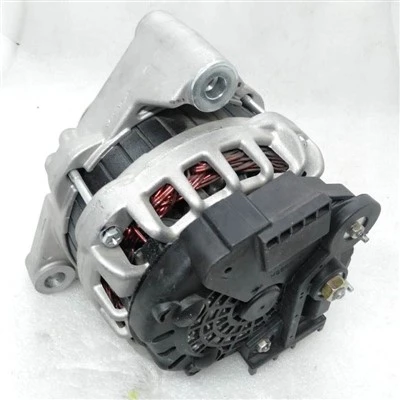
One of the most unique parts of a Heavy Truck Steyr’s AC system is the blower motor assembly, especially for models with sleeper cabs. Unlike a car’s single blower, a Steyr’s AC has two blowers: one for the driver’s front area, and a separate, quieter blower for the sleeper berth. That means a driver can be napping in the back on a hot day, while the person in the front runs the AC at a lower setting, without disturbing each other. We supply high-torque blower motors that are built to handle the additional airflow needed for the sleeper, because stock motors often burn out when drivers run the sleeper AC for 8+ hours overnight while parked.
Wait, I should also mention the refrigerant type, because that’s a common point of confusion. For years, Steyr used R-134a refrigerant, but as environmental regulations tightened in the EU and other regions, they switched to R-1234yf starting in 2018. R-1234yf has a much lower global warming potential, but it’s also more expensive and requires different seals and hoses than R-134a. A lot of independent garages still use old parts designed for R-134a, which can leak or damage the newer AC systems. As a Steyr supplier, we make sure all our replacement parts—hoses, seals, and even AC recharge kits—are compatible with both R-134a and R-1234yf, depending on the truck’s model year. That way, our customers don’t have to worry about compatibility issues when they need a repair.
I’ve seen a lot of drivers try to cheap out on their Steyr’s AC system over the years, and it almost always comes back to bite them. Last year, I worked with an owner-operator who installed a generic aftermarket compressor from a non-Steyr supplier on his 2019 Steyr 18S for a cross-country run. The compressor was cheap, but it wasn’t calibrated to match his truck’s engine RPM, and after 3,000 kilometers, it seized up, leaving him stranded in a remote part of Romania with no AC in 35-degree heat. He ended up paying twice as much for a genuine Steyr compressor from our inventory, plus the cost of the tow truck and lost time. That’s why I always tell Steyr drivers: when it comes to AC parts, original specifications aren’t just a preference—they’re a necessity for keeping your truck on the road and your crew comfortable.
Another thing I’ve learned as a supplier is that Steyr’s AC systems are designed to be serviced easily, which is a big plus for drivers who do their own basic maintenance. Most of the core components—the compressor, condenser, evaporator—are accessible without removing the entire dashboard or front grille, unlike some other heavy truck brands. That means drivers can do simple tasks like replacing the cabin air filter (which is a common maintenance step most people skip) in 10 minutes, rather than paying a mechanic hundreds of dollars for a quick filter change. We stock high-quality cabin air filters too, not just the cheap paper ones that clog in a month—our filters have activated carbon to filter out dust, diesel fumes, and even pollen, which is a huge upgrade for drivers who spend weeks at a time on the road.
Now, if you’re driving a Heavy Truck Steyr and your AC is acting up—whether it’s blowing warm air, making a grinding noise, or leaking refrigerant—you know how stressful that is. A broken AC doesn’t just ruin a driver’s day; it can lead to fatigue, which is a safety hazard on long hauls. Or if you’re hauling temperature-sensitive freight (like food or pharmaceuticals), a failed AC can ruin your entire load, costing you thousands of dollars. That’s why having a reliable supplier for genuine Steyr AC parts isn’t just convenient—it’s a way to protect your business.
I’ve been in this industry long enough to know that trust is everything when you’re buying parts for a truck that works as hard as a Steyr. We don’t cut corners, we don’t sell generic parts that break after a few months, and we know exactly how each AC component works with a Steyr’s specific engine and design. Whether you need a replacement condenser for a 1995 Steyr Legacy, a compressor for a 2023 S line model, or a set of cabin air filters for your fleet of 20 Steyr trucks, we have the parts you need, and we can ship them to you no matter where you’re operating.
If you’re a Steyr owner-operator, fleet manager, or mechanic who’s tired of dealing with unreliable AC parts that cause unnecessary downtime, get in touch to discuss your needs. We’ve got the expertise, the inventory, and the commitment to keeping your Steyr’s AC running smoothly, so you can focus on what matters most—delivering your load on time, and staying comfortable and safe on the road.
FOTON Spare Parts References
- Steyr Truck Technical Manual: Heavy-Duty Air Conditioning Systems, 2022
- European Union Emission Standards for Commercial Vehicles: Refrigerant Requirements, 2019
- Heavy Duty Truck Cooling and Air Conditioning Association (HDTCA) Best Practices Manual, 2021
- Steyr Legacy Series and S Line Model Specifications: AC System Design, 1990–2024
Jinan Hong’an Machinery Parts Co., Ltd.
As one of the most professional heavy truck steyr manufacturers and suppliers in China, we offer a wide range of products with superior quality. With abundant experience, we warmly welcome you to buy high quality heavy truck steyr for sale here from our factory. For price consultation, contact us.
Address: Quanli Heavy Truck Parts City, No. 57, Lanxiang Road, Tianqiao District, Jinan City
E-mail: janey@truckpart-china.com
WebSite: https://www.truckpart-china.com/
