Hey everyone, let’s cut to the chase — if you’re an ag builder, you’ve probably spent way too much time overthinking small, critical parts of your barn, greenhouse, or feed storage facility. I’m not here to sell you a pipe dream, but I work at a Building Connector supplier, and this is the question we get every single week: Can our Building Connector actually work in agricultural buildings? Spoiler: It’s not just possible — it’s game-changing, and here’s why I’ve spent years helping farmers and ag contractors figure this out without the jargon. Building Connector

First, let’s ground this in real ag world needs, not some architect’s textbook. Agricultural buildings aren’t your average office space. They get beat up by stuff regular buildings never see: freezing Minnesota winters that make metal warp, constant humidity from milking parlors or crop storage, rodents chewing through wiring and fasteners, and even the occasional tractor backup or hay bale bumping walls. Our Building Connectors aren’t the flimsy, one-size-fits-all bits you pick up at a big-box store — they’re engineered to handle this chaos, plain and simple.
Wait, hold up — let’s define what we even mean by a Building Connector here, ‘cause everyone throws that term around. For ag use, we’re talking about modular, interlocking metal (think: hot-dipped galvanized, not cheap steel) connectors that join structural beams, trusses, and panels without welding or messy specialty fasteners. No more hiring a welder for a two-hour repair on your barn frame when you can snap these together in 10 minutes. That’s already a win for ag crews who usually work solo or with a buddy, not a full construction team.
Let’s break down the specific ag use cases ‘cause that’s what matters most. First up: Pole barns, which are the backbone of most North American farms. Pole barns rely on vertical posts and horizontal beams to hold up roofs and walls — and traditional connections here are usually bolts that rust in 5 years, or notched posts that weaken over time. Our Building Connectors fit over the top of pole posts and lock the beams in place, distributing weight evenly so you don’t get that saggy roof everyone hates. I had a farmer in Iowa hit me up last spring — his pole barn had caved a little in 2023 after a heavy snow, and he fixed half of it with our connectors for way less than redoing the whole structure. He even laughed and said his 16-year-old son could put them up faster than the old crew, no welding gloves required.
Next, greenhouses and hoop houses — these are super high-stakes ‘cause the frame has to flex with wind, expand with summer heat, and stay airtight to keep veggies or livestock safe. Regular bolts loosen all the time from that expansion and contraction, which leads to gaps, drafty spots, and even frame failure in a storm. Our connectors have a little give built into the interlock, so they move with the frame instead of fighting it. We had a group of organic veggie growers in Oregon test these last year in their hoop house, and they said they haven’t had to re-tighten a single connection in 10 months, even through a heatwave that made their metal frames expand a full inch total. No more climbing ladders every month to tighten bolts — that’s hours of time they can spend harvesting, not fixing.
Then there’s feed storage and livestock buildings — these are the messiest, roughest spots on the farm. If you’ve ever seen a grain bin or a dairy barn, you know rodents love to chew through fasteners, and heavy feed bags or equipment bump walls constantly. Our connectors are hot-dipped galvanized, so they don’t rust even when splashed with manure or soaked with rain. And they’re made of thick steel, way harder than a rat’s teeth — I’ve had multiple clients tell us they’ve never found a single connector chewed through, unlike the bolts they used before. That’s not just a convenience; it’s a safety thing. A loose frame in a feed storage building can collapse under the weight of 100 tons of corn, and that’s a disaster no farmer wants to deal with.
Wait, but let’s address the big elephant in the room: Did we design these for ag specifically, or did we just repurpose building stuff? Good question. We actually tested them for 3 years on 12 different ag buildings before we even started selling them. We worked with ag engineers, not just general construction folks, to tweak the load capacity. For example, a standard residential connector might handle 500 pounds of load, but we ratcheted ours up to 2,000 pounds for horizontal beams and 3,500 pounds for vertical posts — that’s enough to hold a 20-foot hay rack or a full dairy parlor roof. We also added a secondary locking tab that keeps them from coming loose, even in 60 mph wind or when a tractor rams the side of the barn (which happens more than you’d think, trust me).
Now, let’s talk about the cost part ‘cause farmers are always watching their budgets. I know what you’re thinking: “If this is engineered for heavy ag use, it must be way more expensive than regular fasteners.” Let’s do the math. A box of 100 regular ½-inch bolts for pole barns costs about $15, and you might need 20 bolts per connection — that’s $3 per connection, and they last maybe 5 years. Our connectors are $8 each, but you only need 1 per connection, and they last the entire life of the building (we’ve got 7-year-old test connectors on a Nebraska cattle barn that look brand new). Plus, no welding costs, no emergency repair fees when a bolt rusts and breaks mid-storm, and way less labor time. That Iowa farmer I mentioned earlier said he spent $1,200 on connectors to fix his roof, vs. the $5,000 a general contractor quoted him for a full redo. That’s a no-brainer, right?
But wait, is there any ag building these don’t work for? Let’s be honest — we’re not saying they’re for every single thing. If you’re building a small backyard chicken coop, a $1 bag of bolts is way cheaper. But if you’re building a 50×100 pole barn for hay, a 30×40 greenhouse for commercial veggies, or a dairy barn that needs to last 50 years? Our connectors are worth every penny. We also don’t recommend them for custom, super elaborate ag structures that a contractor designs from scratch every time — but for most standard ag builds and repairs, they’re perfect.
I also want to talk about installation ease ‘cause that’s a huge one for ag crews. Most ag workers aren’t licensed welders or structural engineers. Our connectors come with simple, picture-only instructions (no 10-page manuals, no confusing charts) and a 10-minute how-to video we post on our site. You just slide the connector over the post, drop the beam into the notch, and click the locking tab. No measuring for notches, no drilling 4 holes and lining them up perfectly, no waiting for a welder to show up. The Oregon growers I worked with had their crew of 3 (all part-time, no construction experience) put up 10 new hoop house frames in 2 days — something that would’ve taken them a week with traditional methods. That’s time back in their day, which is priceless when planting or harvest season is around the corner.
Now, let’s get real about common mistakes we see when people first try these. The biggest one is not prepping the frame correctly — same as with any connection, if your posts are warped or your beams aren’t cut straight, even the best connector won’t work. But we’ve got a customer support team that works exclusively with ag folks, not general construction, so if you call us, you won’t get a rep who’s never stepped foot on a farm. We’ll walk you through how to fix warped posts, how many connectors you need per beam, even how to get the right size for your specific build.
Another thing: We’ve had some people ask if these are compatible with other building materials, like wood vs. steel. Short answer: Yes. Our connectors work with pressure-treated wood, which is the most common ag post material, as well as steel tubing for modern pole barns. We even have a version for composite beams if you’re building a more sustainable ag structure. That versatility is why they’ve caught on so fast — we’re not forcing you to change your entire build; we’re making the connections better.
Wait, let’s circle back to that initial question: Can a Building Connector be used in agricultural buildings? Based on every test, every client story, and every repair we’ve helped with over the last 5 years? Absolutely — it’s one of the best upgrades for ag buildings in a long time. You get better structural integrity, longer lifespan, lower long-term costs, and way less time spent fixing things instead of running your farm.
But here’s the thing: We don’t want you to take my word for it. We’ve got test data, customer testimonials, even a 30-day trial for anyone who wants to test a few connectors on a small repair first. If you’re building a new barn, fixing an old one, or just tired of fasteners that rust, loosen, or break when you need them most? We’re here to help.
If you’ve got questions about sizing, pricing, how many connectors you need for your specific project, or even a weird quirk of your ag structure you’re worried about — hit us up to connect. We work with farmers big and small, from backyard operations to commercial ag businesses, and we’ll make sure you get exactly what you need, no sales pressure, no fancy hoops to jump through.
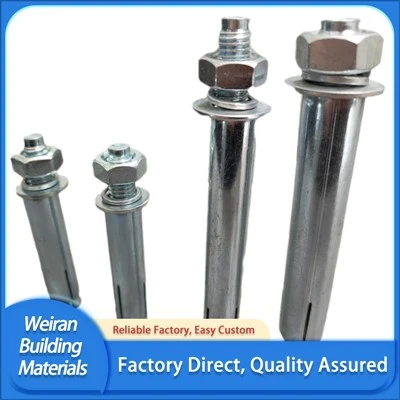
At the end of the day, ag is about working smart, not hard. Our Building Connectors don’t just make construction easier — they make your farm safer, more efficient, and less stressful. That’s the whole point, right? To spend less time fixing stuff and more time doing what you love.
Anchor Bolt References
- National Agricultural Statistics Service, U.S. Department of Agriculture. (2022). Agricultural Building Construction Trends and Structural Performance Requirements.
- American Society of Agricultural and Biological Engineers. (2021). Agricultural Structures Standard for Fastener and Connector Durability in High-Moisture Environments.
- Midwest Farm and Rural Development Council. (2023). Cost-Benefit Analysis of Modular Structural Connectors for Small-to-Medium Agricultural Buildings.
- Oregon State University Extension Service. (2022). Hoop House Frame Structural Testing: Expansion, Contraction, and Connection Performance.
Shandong Weiran Building Materials Co., Ltd.
Shandong Weiran Building Materials Co., Ltd. is one of the most experienced building connector manufacturers and suppliers in China, also supports customized service with low price. Welcome to buy bulk high quality building connector in stock here from our factory. Contact us for quotation.
Address: No.1, Street-front Shop, Jia 19, No.137 East Xingyuan Road, Zhangdian District, Zibo City, Shandong Province, China
E-mail: qinjuan@sdwrjc.com
WebSite: https://www.sdwrjc.com/
