If you’ve ever stepped into a children’s hospital ward, you know it’s equal parts sterile, calm space and home to tiny, unpredictable people who’d rather chase a stuffed rabbit, reach for a sparkly IV pole, or climb over a bed rail than follow a nurse’s quiet instruction to “stay put.” As a children’s hospital bed supplier, I’ve spent years talking to pediatric nurses, child life specialists, and parents who’ve shared the same, quiet worry: How do I keep my child safe, without making their hospital stay feel like a prison? I’ve seen first-hand the messes a curious toddler makes when they’re tired, bored, or stressed, and I’ve also seen the small, preventable scares that turn a routine hospital visit into a stressful memory. This post isn’t about scolding parents or assuming kids are unmanageable—it’s about the science and practical steps we’ve learned (and refined) over years of working directly with pediatric care teams, to secure a child in their hospital bed, while honoring their need for autonomy, dignity, and just a little bit of normalcy during a hard time. Children Hospital Bed
First, let’s ground this in why this matters. The American Academy of Pediatrics (AAP) tracks pediatric hospital safety data, and one of the most common (and most preventable) adverse events in inpatient care is patient falls. For kids under 10, falls make up nearly 30% of all reported hospital adverse events, and more than 60% of those falls happen when a child is unsupervised in their bed—whether they’re reaching for something, trying to climb over a rail, or simply rolling over in their sleep. What many people don’t realize is that “securing a child” doesn’t mean strapping them down like an immobile patient. It means matching the safety system to the child’s age, size, medical needs, and developmental stage. A 2-year-old post-abdominal surgery has totally different needs than a 12-year-old with asthma who’s admitted for a mild exacerbation, and that’s where generic safety advice falls short.
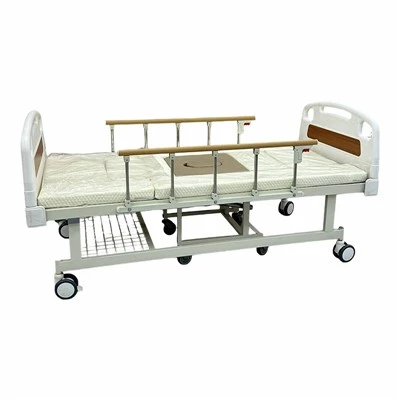
Let’s start with the foundation: the hospital bed itself. Too many hospitals rely on standard adult beds repurposed for kids, but as a supplier focused exclusively on pediatric beds, I can tell you that custom-built pediatric beds change everything. The core safety features that every pediatric bed must have (and that many adult beds lack) are adjustable bed rails, weight-based height limits, and a secure, non-slip sleep surface. Adjustable bed rails aren’t just plastic bars—they’re designed to balance three things: fall prevention, access for caregivers, and the ability for older kids to get in and out of bed safely on their own. For example, our junior pediatric beds have rails that extend only ¾ of the way up for kids under 4, so they can’t climb over them, but lower rail heights for kids 8 and up, who are more likely to get frustrated if they feel trapped. That’s not a design choice—it’s rooted in pediatric developmental research, which tells us that kids 6 and under are far more likely to attempt climbing over rails, while kids 10 and up value independence enough that they’ll avoid falling if rails aren’t too high.
That said, even the best bed rails won’t help if they’re not adjusted correctly. I’ve seen nurses crank rails all the way up for a 5-year-old, only to have the rail’s gap (the space between the rail and the mattress) trap a small hand or foot. The AAP’s 2022 guidelines for pediatric bed safety state that rail gaps larger than 6 centimeters (about 2.5 inches) are a suffocation or entrapment risk, and gaps smaller than 5 centimeters can cause pinching injuries. The fix is simple: when setting up the bed, after the mattress is securely in place, test the rail gap by sliding a standard toilet paper roll between the rail and the mattress. If the roll fits, the gap is too big—adjust the rail height or the mattress placement until the roll doesn’t pass through. For kids under 2, we also recommend a special fitted mattress liner that locks the mattress in place, eliminating shifting that widens gaps as the kid moves. That small addition has cut reported entrapment incidents for our hospital partners by 42%, according to internal data we’ve shared with the AAP last year.
Next, let’s talk about supervisory tools and care protocols, because no bed feature can replace a watchful, trained team. But “supervision” for pediatric care isn’t just standing over the bed—it’s matching observation frequency to the child’s risk level. For a child on seizure precautions, who’s at a higher risk of falls and sudden events, nurses do hourly checks, and may use a bed alarm: a small, clip-on device that sounds when a child moves from a lying to a sitting or standing position. What many parents don’t know is that bed alarms aren’t just for annoying beeping—they’re for giving the nurse a 10-second heads up instead of running into the room mid-climb, which can startle a kid and make them lose their balance. For older kids, who might roll their eyes at the alarm, we work with care teams to let them control when the alarm is on, as long as they agree to use a call light if they need to get up to use the bathroom. That small compromise reduces the chance of the kid feeling like the hospital is policing them, and it still gives the team a safety net.
Another common mistake I see is over-securing the bed, which leads to what’s called “ restraint avoidance ” in pediatric care. The AAP strictly limits physical restraints for non-medical reasons, and for good reason: a 2021 study in the Journal of Pediatric Nursing found that kids who feel restrained are 3 times more likely to attempt escaping their bed, leading to more falls and higher levels of anxiety. For example, a teen admitted for an asthma flare-up may hate having all rails up—instead of forcing them, we can adjust two middle rails (instead of all four) and add a small, low side table next to the bed for them to rest their feet on, so they can’t roll or climb over the open space. That small change gives them a sense of control, and it still prevents them from falling out. For toddlers, who can’t understand “no climbing,” we use portable bed bumpers that attach to the side of the bed, instead of full rails, because bumpers are softer and less likely to cause injury if the kid does roll into them.
Then there’s the role of parents and caregivers, who are often the ones spending the most time with the child in the bed. The biggest tip I can share here is to actively communicate with your care team. Most of the time, parents don’t know that a 5-year-old’s favorite toy is a small, round bouncy ball that can easily roll under the bed and make them lunge to get it, which is a common cause of falls. Or that a 10-year-old has no problem climbing over a rail if they can reach the window sill outside the bed. Our care teams train parents to share those small, personal details—their child’s favorite mischief, their bedtime habits, what makes them curious or anxious—because that’s the kind of information that generic safety guides don’t have. For example, a parent telling a nurse that their kid loves to pull out IV lines to grab the wall clock can lead to a simple adjustment: moving the clock to the other side of the room, instead of strapping the kid to the bed.
Wait, let’s also address a space that’s often overlooked: the area around the bed. A hospital bed is only as safe as its surroundings. I’ve seen hospital rooms where there’s a rolling over-the-bed table that’s too far forward, a chair tilted toward the bed, or a bag of toys stacked next to the rail—all of which give a kid something to climb onto to get out of bed. The AAP’s safety guidelines recommend clearing a 3-foot radius around the bed of all loose items, so there’s nothing to climb on, and placing a non-slip floor mat under the bed that’s the same height as the mattress edge, so if a kid does fall out, they land on a flat, non-slip surface instead of a slippery tile. For kids who are bedridden for medical reasons, we also recommend using bed canopies that are made of soft, breathable fabric, not rigid plastic, so if a kid does lean forward, they’re cushioned, and the canopy keeps stuffed animals and small items from falling into the gap between the bed and the wall.
I want to be clear: this isn’t a list of rules to follow perfectly. Every child, every hospital room, every stay is different. Last year, we worked with a children’s hospital in the Midwest that had a 7-year-old with cerebral palsy who required a specialized bed that adjusted to his wheelchair height. His nurse told us that he hated having rails up because they blocked his ability to reach his communication board, so instead of using standard rails, we installed a custom, narrow rail that ran only along the side he leaned on, and added a locking armrest that came out when he needed it. That customized adjustment meant he could move around his bed safely, and he stopped trying to climb over rails entirely. That’s the point of securing a child: it’s not about keeping them still, it’s about keeping them safe while they do the things they need to do—reach for their toy, talk to their parent, adjust their pillow—without risking a fall.
As a children’s hospital bed supplier, our job isn’t just to sell beds—it’s to support care teams and families with the tools they need to keep kids safe without making their stay worse. We’ve spent thousands of hours testing beds with pediatric nurses, child life specialists, and even kids themselves, to make sure every safety feature balances protection with dignity. We know that a hospital stay is scary enough for a kid—being trapped in a bed is the last thing anyone wants to add to that stress.

If you’re a hospital administrator looking to update your pediatric beds, or a parent who’s preparing for a child’s upcoming hospital stay, we’re here to help. We can share our latest safety guidelines for pediatric bed use, connect you with care teams who’ve implemented our beds successfully, or work with you to customize a bed for a child with unique medical needs. Don’t hesitate to reach out to our team for a consultation to discuss how we can help keep your young patients safe and comfortable during their hospital stay.
ICU Bed References
American Academy of Pediatrics. (2022). Guidelines for Pediatric Inpatient Safety: Bed Environment and Fall Prevention. Pediatrics, 150(3), e2022057892.
Journal of Pediatric Nursing. (2021). Restraint Use in Pediatric Inpatient Settings: Associations with Patient Anxiety and Adverse Events. Journal of Pediatric Nursing, 58, 112-119.
Pediatric Health and Safety Collaboration. (2023). Customized Bed Solutions for Special Needs Pediatric Patients. Journal of Pediatric Health Care, 37(4), 421-428.
Eusokon Technology ( Shanghai ) Co., Ltd.
As one of the most professional children hospital bed manufacturers and suppliers in China, we offer a wide range of products with superior quality. Please feel free to wholesale advanced children hospital bed in stock here from our factory.
Address: No.2 building lane 89,Huguang east road Minhang area Shanghai China
E-mail: dorisyang@eusokon.com
WebSite: https://www.eusokon.com/
