Hey there! I’m a supplier of PVC conveyor belts, and I’ve been in this business for quite a while. One question that often comes up from our customers is, "How does the speed of a PVC conveyor belt affect its performance?" Well, let’s dive right into it and break it down. PVC Conveyor Belt

1. Basics of PVC Conveyor Belt Speed
First off, the speed of a conveyor belt is measured in feet per minute (FPM) or meters per second (m/s). It’s a pretty straightforward concept – how fast the belt is moving. But this simple factor can have a huge impact on how well the conveyor belt does its job.
When we’re talking about PVC conveyor belts, we’re looking at a type of belt that’s used in a ton of different industries, from food processing to manufacturing. And in each of these industries, the speed requirements can vary a lot.
2. Impact on Throughput
One of the most obvious effects of conveyor belt speed is on throughput. Throughput is basically how much stuff the conveyor can move in a given amount of time. It’s like how many burgers a fast – food joint can cook and serve in an hour.
If you increase the speed of the PVC conveyor belt, the throughput goes up. For example, in a bottling plant, if the conveyor belt is moving at a slow speed, it can only transport a limited number of bottles per minute. But if you crank up the speed, more bottles can be moved along the line, and that means more products can be produced and shipped out.
However, there’s a catch. If the speed is increased too much, it can cause problems. Products might start to jostle around, and there’s a higher risk of them falling off the belt. In a food processing plant, this could mean a mess of spilled ingredients, and in a manufacturing setting, it could lead to damaged products.
3. Wear and Tear
The speed of the conveyor belt also has a big influence on wear and tear. When the belt moves faster, there’s more friction between the belt and the pulleys, as well as between the belt and the products being transported.
Higher friction means more heat is generated. PVC belts can handle a certain amount of heat, but if the speed is too high and the heat builds up, it can start to degrade the PVC material. The belt might become brittle over time, and its lifespan can be significantly shortened.
Also, the faster the belt moves, the more stress it puts on the joints and seams. If these areas aren’t properly reinforced, they can start to come apart. This is a major headache because it means downtime for repairs, which costs money and can disrupt production.
4. Accuracy and Precision
In some industries, accuracy and precision are super important. For example, in an electronics manufacturing plant, the conveyor belt needs to move components at a very specific speed so that they can be accurately placed and assembled.
If the conveyor belt speed is inconsistent, it can throw off the whole production process. Components might not line up correctly, and that can lead to defective products. Even a small variation in speed can make a big difference in the final outcome.
Controlling the speed precisely is crucial. We often use sophisticated speed control systems to make sure the belt moves at a steady pace. But even with these systems, if the speed is too high, it can be more difficult to maintain that precision.
5. Safety Considerations
Safety is always a top priority when it comes to conveyor belts. Faster – moving belts pose a greater risk to workers. If a worker accidentally gets caught in a high – speed conveyor belt, the consequences can be really serious.
There are also more chances of objects flying off a fast – moving belt and hitting someone. That’s why it’s essential to have proper safety guards and training for workers. And as a supplier, we always make sure to provide our customers with safety guidelines that are tailored to the specific speed settings of the conveyor belts we sell.
6. Noise and Vibration
Increased belt speed can also lead to more noise and vibration. When the belt is moving quickly, there’s more rattling and shaking from the pulleys and other components. This can be a real nuisance in a workplace, especially in an environment where people need to be able to communicate clearly or where noise regulations need to be followed.
Excessive vibration can also affect the stability of the products on the belt and can even cause damage to the conveyor system itself over time. To combat this, we use special dampening materials and design our conveyor systems to minimize noise and vibration, but keeping the speed at a reasonable level helps a lot too.
7. Finding the Right Speed
So, how do you find the right speed for your PVC conveyor belt? Well, it depends on a bunch of factors. You need to think about the type of products you’re transporting, the required throughput, and the level of accuracy needed.
For light – weight and small items, you can usually get away with a higher speed. But for heavy or fragile products, a slower speed might be necessary. You also need to consider the overall layout of your production line and how the conveyor belt fits into it.
As a supplier, we work closely with our customers to figure out the optimal speed for their specific applications. We’ll come to your facility, take a look at your operations, and use our expertise to recommend the best speed settings for your conveyor belt.
So, What’s the Bottom Line?
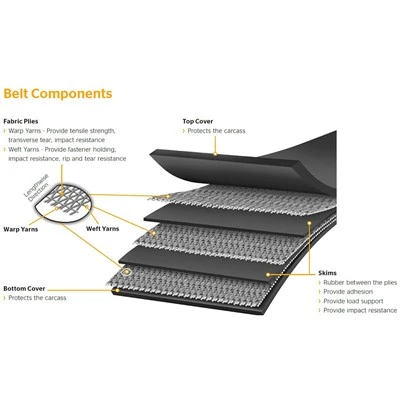
The speed of a PVC conveyor belt is a critical factor that can make or break its performance. It affects throughput, wear and tear, accuracy, safety, noise, and vibration. Finding the right speed is a balancing act, and it requires careful consideration of many different factors.
Self Cleaning Conveyor Belt If you’re in the market for a PVC conveyor belt, or if you’re looking to optimize the performance of your existing conveyor system, don’t hesitate to reach out. We’ve got the experience and know – how to help you get the most out of your conveyor belt. Whether it’s determining the right speed or providing maintenance and repair services, we’re here to support you every step of the way. Contact us today to start a conversation about your conveyor belt needs, and let’s work together to find the perfect solution for your business.
References
- "Conveyor Belt Handbook" by Fördertechnik International
- "Industrial Conveyor Systems: Selection, Design and Operation" by Peter A. Cox
- Industry studies on conveyor belt performance and speed from various trade associations.
Alumina Technology (Qingdao) New Materials Co., Ltd.
As one of the most professional pvc conveyor belt manufacturers and suppliers in China, we also support customized service. With abundant experience, we warmly welcome you to buy pvc conveyor belt for sale here and get quotation from our factory. For price consultation, contact us.
Address: No.448, Jiangshan South Road, Huangdao District, Qingdao City, Shandong Province
E-mail: Gloria.zhang@contitech.cn
WebSite: https://www.altechconveyorbelt.com/
