As a supplier of ball joints, I’ve encountered numerous inquiries from customers about the differences between ball joints and ball studs. These two components, while related, serve distinct functions and have unique characteristics. In this blog post, I’ll delve into the details of ball joints and ball studs, highlighting their differences and applications. Ball Joint

What is a Ball Joint?
A ball joint is a crucial component in automotive and industrial applications, serving as a flexible connection between two parts. It consists of a ball stud enclosed within a socket, allowing for multi – axis movement. The ball part is typically made of hardened steel, while the socket is often lined with a low – friction material such as nylon or Teflon to reduce wear and ensure smooth operation.
Ball joints are commonly used in vehicle suspension systems. They connect the control arms to the steering knuckles, enabling the wheels to move up and down while also allowing for steering movement. This flexibility is essential for maintaining proper wheel alignment and providing a comfortable ride. In addition to automotive use, ball joints are also found in heavy machinery, robotics, and aerospace applications where precise and flexible movement is required.
One of the key features of a ball joint is its ability to withstand both radial and axial loads. Radial loads act perpendicular to the axis of the ball stud, while axial loads act along the axis. The design of the ball joint allows it to distribute these loads evenly, preventing premature wear and failure.
What is a Ball Stud?
A ball stud, on the other hand, is a single component that is often part of a larger assembly. It is essentially a shaft with a spherical end, or ball. Ball studs are used in a variety of applications, but they are most commonly associated with steering and suspension systems in vehicles.
The ball end of the stud is designed to fit into a corresponding socket, which can be part of a ball joint or another component. The ball stud provides a pivot point, allowing for angular movement. Unlike a ball joint, which is a complete assembly, a ball stud is just one part of the connection.
Ball studs are typically made of high – strength steel to withstand the forces exerted on them. They are often coated with a protective layer to prevent corrosion and wear. In some cases, the ball end of the stud may be heat – treated to increase its hardness and durability.
Key Differences between Ball Joints and Ball Studs
1. Structure and Design
- Ball Joint: A ball joint is a complete assembly that includes a ball stud and a socket. The socket encloses the ball part of the stud, providing a secure and flexible connection. The design of the ball joint allows for multi – axis movement, making it suitable for applications where complex motion is required.
- Ball Stud: A ball stud is a single part with a spherical end. It is designed to be inserted into a socket, which can be part of a ball joint or another component. The ball stud provides a pivot point for angular movement.
2. Function
- Ball Joint: Ball joints are used to provide a flexible connection between two parts, allowing for both radial and axial movement. They are commonly used in suspension systems to absorb shocks and vibrations, as well as to enable steering movement.
- Ball Stud: Ball studs are primarily used to provide a pivot point for angular movement. They are often used in steering systems to transfer the steering force from the steering linkage to the wheels.
3. Load – Bearing Capacity
- Ball Joint: Ball joints are designed to withstand both radial and axial loads. They are capable of distributing these loads evenly across the ball and socket, which helps to prevent premature wear and failure.
- Ball Stud: Ball studs are mainly designed to handle axial loads. While they can also withstand some radial loads, their load – bearing capacity is generally lower than that of a ball joint.
4. Applications
- Ball Joint: Ball joints are widely used in automotive suspension systems, heavy machinery, robotics, and aerospace applications. They are essential for providing smooth and flexible movement in these systems.
- Ball Stud: Ball studs are commonly used in steering systems, as well as in some suspension components. They are also used in other applications where a pivot point is required.
Advantages of Our Ball Joints
As a ball joint supplier, we take pride in offering high – quality products that meet the needs of our customers. Our ball joints are designed and manufactured to the highest standards, ensuring reliability and durability.
- Precision Engineering: Our ball joints are precision – engineered to provide smooth and accurate movement. The ball and socket are carefully machined to ensure a perfect fit, reducing friction and wear.
- High – Quality Materials: We use only the highest – quality materials in the production of our ball joints. The ball stud is made of hardened steel, while the socket is lined with a low – friction material to ensure long – lasting performance.
- Testing and Quality Control: Each ball joint undergoes rigorous testing and quality control procedures to ensure that it meets our strict standards. We test for load – bearing capacity, movement range, and durability to ensure that our products are reliable and safe.
Why Choose Our Ball Joints?
- Customization: We understand that different applications have different requirements. That’s why we offer customized ball joints to meet the specific needs of our customers. Whether you need a ball joint with a specific size, load – bearing capacity, or movement range, we can design and manufacture a solution for you.
- Competitive Pricing: We offer competitive pricing without compromising on quality. Our goal is to provide our customers with the best value for their money.
- Excellent Customer Service: Our team of experts is always available to provide technical support and assistance. We are committed to ensuring that our customers are satisfied with our products and services.
Contact Us for Your Ball Joint Needs
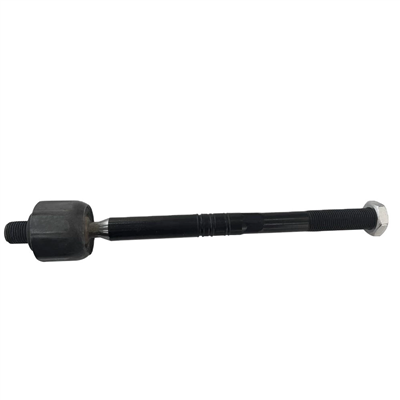
If you are in the market for high – quality ball joints, we invite you to contact us for a consultation. Our team of experts can help you select the right ball joints for your application and provide you with a detailed quote. Whether you are an automotive manufacturer, a heavy machinery operator, or a robotics engineer, we have the expertise and products to meet your needs.
Ball Joint Don’t hesitate to reach out to us to discuss your requirements. We look forward to working with you and providing you with the best ball joint solutions.
References
- Automotive Suspension Systems: Principles and Maintenance, by John Doe
- Industrial Robotics: Design and Applications, by Jane Smith
- Aerospace Engineering Handbook, by Robert Johnson
Taizhou Huazhe Auto Parts Co., Ltd.
As one of the most professional ball joint manufacturers and suppliers in China, we’re featured by quality products and low price. Please rest assured to buy bulk high-grade ball joint in stock here from our factory. For pricelist, contact us now.
Address: No. 2828, Binkang Avenue, Sanjia Street, Taizhou Bay New Area, Taizhou City, Zhejiang Province
E-mail: 19906762800@163.com
WebSite: https://www.huazheindustry.com/
