Hey there, if you’re running a factory, processing plant, or any industrial operation that relies on keeping gear, materials, or production lines from overheating, you know your industrial cooling unit isn’t just a “nice-to-have”—it’s make-or-break. But let’s be real, most folks who reach out to me about these units first ask about specs, capacity, or even price, and then only after we’re chatting do they hit the big question: “What the hell power do I actually need for this thing?” As a guy who’s been supplying industrial cooling units for over 12 years, I’ve fielded this question more times than I can count, and let me tell you, there’s no one-size-fits-all answer. Skip the generic “it depends” garbage you’ll find on random blogs—let’s break this down like we’re geeking out over the actual numbers, not just sales jargon. Industrial Cooling Unit
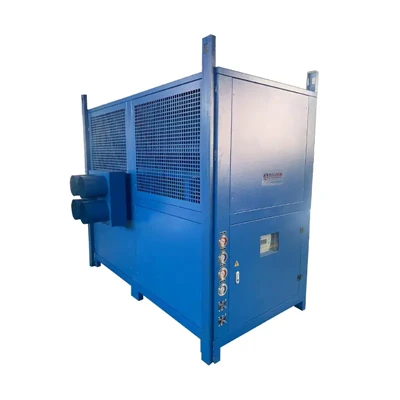
First off, let’s get one thing straight: industrial cooling units aren’t your tiny home AC. Your home AC runs on 110V or 220V, uses maybe 2-5 kW max, and that’s that. Industrial units? We’re talking power in the kilowatts (kW) to megawatts (MW) range, sometimes more for big operations, and there are so many variables that it’s easy to miscalculate if you skip digging into the details. I once had a customer who ordered a unit based on a buddy’s recommendation, only to have their entire plant’s power grid trip 10 minutes after startup. Total mess, and we had to rush a temporary unit to their site, plus fix their power panel. That’s why getting power requirements right isn’t just about avoiding headaches—it’s about keeping your whole operation moving.
Let’s start with the core factors that drive power needs, because these are the non-negotiables that can’t be glossed over. First, is your cooling unit air-cooled or water-cooled? Yeah, I know, that’s a basic split, but it directly impacts power. Air-cooled units use big fans to blow hot air out, right? Those fans pull extra power—like, a 50-ton air-cooled unit will use anywhere from 15 to 25 kW for the compressor and fans combined. Water-cooled units, on the other hand, use a water loop to carry heat away, so they don’t need those big, power-hungry fans. A 50-ton water-cooled unit might only use 10 to 18 kW for the compressor plus a small pump or two. That’s a huge difference, and it’s the first thing I ask a customer when they call. I’ve had people show up expecting a water-cooled unit only to realize they don’t have a dedicated water line, so they have to switch to air-cooled—and adjust their power budget on the fly.
Next, your cooling load. That’s basically how much heat your unit has to remove, and that’s where most people mess up. Cooling load isn’t just based on the size of your production line or space—there are a bunch of components that add to it. Let’s break that down. First, the heat generated by your equipment itself. If you’re running CNC machines, plastic extruders, food processing equipment, or any heavy industrial gear, those motors and processes generate tons of heat. For example, a plastic extruder running 24/7 might pump out 100 kW of heat alone. Then there’s ambient heat from the space around the unit—if your plant is in a hot climate, say Arizona or Texas, that adds 10-20% extra to the load, because the air or water the unit is working with is already hotter. Even things like the heat from workers (if you have people in the same space) or sunlight streaming through windows count, though that’s smaller for big facilities.
Wait, and don’t forget the operating conditions. Are you running your unit 8 hours a day, 5 days a week? Or 24/7, 365 days a year? I had a food processing customer a few years back who thought they could get away with a unit rated for 12 hours of run time, since their production only ran that long. But then they switched to a 2-shift operation to meet demand, and their unit burned out in 6 months because it wasn’t built for continuous run duty. That’s not just about the unit’s build—it’s about power draw too. Units rated for continuous operation have more robust compressors and motors that handle consistent power draw, whereas units made for intermittent use might draw less power short-term but can’t hold up. If you’re running 24/7, you need to account for that extra power demand.
Now, let’s talk about different types of industrial cooling units, because their power requirements vary wildly too, and that’s another thing people mix up. Let’s go through the common ones I supply, so you can see the differences. First, packaged air-cooled chillers—these are the most common for small to mid-sized operations, like warehouses, small manufacturing plants, or food and beverage lines. A 10-ton packaged air-cooled chiller (enough to cool a small production line) uses roughly 3.5 to 5 kW of power. A 100-ton unit, which can cool a bigger factory or multiple processes, uses 30 to 45 kW. Got a super big operation, like a large chemical plant? We’re talking centrifugal chillers, which can be 500 tons or more, and their power draw jumps to 150 to 250 kW, sometimes even higher for really large units.
Then there are water-cooled chillers, like I mentioned earlier. For the same 10-ton size, a water-cooled chiller is 2.8 to 4 kW—so like 20% less than air-cooled. A 100-ton water-cooled unit is 25 to 38 kW, which is a big savings. But again, you have to have the water infrastructure for that—cooling towers, pipes, pumps. If you don’t have that, you can’t go water-cooled, so you’re stuck with the higher power draw of air-cooled.
And let’s not forget process cooling vs. space cooling. If you’re cooling the entire plant (space cooling), that’s one thing, but if you’re cooling a specific process—like keeping plastic mold temperatures consistent, or cooling a hydraulic system on a construction machine—those units are way more precise, and their power depends on the process heat. For example, a compact process chiller for a small laser cutter might only pull 1.5 kW, while a process chiller for a large plastic injection molding line could pull 50 kW or more. That’s a massive range, and if you mix up space vs. process cooling, you’ll end up with a unit that’s either underpowered (and overheats) or way too powerful (wasting money on unnecessary power).
Now, the technical stuff that most people don’t think about but that makes a huge difference: power factor, voltage requirements, and inrush current. Let’s keep this simple, no boring engineering jargon. Power factor is basically how efficiently your unit uses the electricity it’s given. Industrial units that run on 3-phase power (which is standard for industrial setups, way more efficient than single-phase) have a power factor of around 0.8 to 0.95. If your power factor is low, that means you’re wasting power—your unit is drawing more electricity than it needs to do the same job. Some of the newer units we supply have variable frequency drives (VFDs) that boost power factor, which can save you 10-15% on your electricity bills every month. That’s not a small number for a big plant.
Voltage is another big one. Most industrial units run on 480V 3-phase power, but some smaller ones run on 240V or 208V, and big centrifugal chillers might run on 600V. If your plant doesn’t have the right voltage, you either need to upgrade your power grid (which is a costly project) or pick a unit that fits your existing voltage. I had a customer in a small town a while back whose plant only had 240V 3-phase power, so they couldn’t get the 480V unit they wanted—they had to go with a slightly smaller unit rated for their voltage, and we had to adjust the power calculation to make sure their grid could handle it. Skipping voltage checks leads to expensive upgrades or units that don’t work.
Then there’s inrush current. That’s the extra surge of power a unit uses when it first turns on, way higher than its running power. For example, a 50-ton air-cooled chiller that runs on 20 kW might have an inrush current of 80 to 100 kW when it starts up. If you have multiple units turning on at the same time, or other big equipment like motors starting up, that surge can trip your circuit breakers or blow fuses. That’s why when we do a power assessment for a customer, we don’t just look at the running power—we add in that inrush current and account for any other loads on the grid. I once had a customer who tried to hook up their new 100-ton chiller without calculating inrush, and their entire plant’s power went out during a startup, knocking out their production line and costing them $20k in lost time. Ouch.
Wait, and let’s talk about efficiency ratings, because that ties directly to power requirements. I know everyone looks at SEER for AC, but for industrial chillers, the rating is IPLV (Integrated Part Load Value) or EER (Energy Efficiency Ratio). EER is cooling capacity divided by power input—so a higher EER means a more efficient unit, which uses less power for the same cooling. A unit with an EER of 12 will use less power than one with an EER of 9, even if they have the same capacity. That’s a huge long-term saving. For example, if you run a 100-ton unit 24/7, a unit with EER 12 uses about 1,750 kW per month, while one with EER 9 uses 2,330 kW—so that’s almost 600 kW less per month, which at $0.10 per kW is $60 a day, $1,800 a month. Multiply that by a year, and that’s $21,600 in savings. I always tell customers not to just look at upfront cost—focus on efficiency, because the power savings add up way more over time.
Now, how do you actually calculate the power you need? Let’s walk through a quick example, so it’s not just theory. Say you have a small plastic manufacturing plant, producing 10,000 pounds of plastic per hour, running 2 shifts (16 hours a day, 5 days a week, so 80 hours a week). The equipment (extruder, mold machine) generates 80 kW of heat. Your plant is in Florida, so ambient heat adds 15% extra, and you’re cooling the process, not the entire plant. So total cooling load is 80 kW + 15% = 92 kW. Now, since you don’t have a dedicated water line, you need an air-cooled process chiller. A 100-ton air-cooled process chiller has a cooling capacity of about 352 kW (wait, no, hold on—1 ton is 12,000 BTU, so 100 tons is 1.2 million BTU, which is ~352 kW, right. So that’s way more than your 92 kW load, but you need to size a little extra to account for fluctuations, so a 30-ton unit would be enough. A 30-ton air-cooled process chiller has a power draw of ~9 to 13 kW, plus inrush current of ~36 to 50 kW. So your total power requirement would be a 240V or 480V 3-phase circuit that can handle at least 15 kW of running power and 50 kW of inrush. That’s a simple example, but you get the idea—size the unit just above your total cooling load, account for efficiency, and check your voltage and inrush.
Now, common mistakes I see customers make all the time, that end up costing them. First, undersizing the unit, which means it has to run non-stop, drawing more power, and eventually burns out. Or oversizing, which wastes money on upfront costs and unnecessary power. Second, forgetting inrush current, which leads to tripped circuits or damaged power equipment. Third, not accounting for climate or operating hours—like running an intermittent unit 24/7, or using a unit made for a cool climate in a hot one. Fourth, not checking their existing power infrastructure—like not having the right voltage, or their grid can’t handle the load, so they have to pay for expensive upgrades.
If you’re not sure how to figure this out, that’s where I come in. As an industrial cooling unit supplier, I don’t just sell you a unit and ghost you. I do a free assessment of your operation: talk to you about your processes, how long you run your unit, your climate, your existing power setup, and then calculate the exact power requirements, plus recommend the most efficient unit that fits your needs, no fluff. I’ve worked with hundreds of factories, food processing plants, chemical operations, and more, so I’ve seen every scenario. Whether you need a small unit for a laser cutter or a big centrifugal chiller for a 500,000 sq ft plant, I can help you get the power right the first time, so you don’t have to deal with the headaches of over or undersizing.
Let me wrap this up, because I don’t want to ramble too long. The key takeaway here is that industrial cooling unit power requirements aren’t a single number—they’re a mix of your unit type (air vs water cooled), cooling load, operating hours, climate, power factor, voltage, and inrush current. Skip the generic online calculators, because they don’t account for your specific operation. If you’re in the market for a new industrial cooling unit, or your current one is causing power issues, reach out to me for a no-obligation chat. I’ll walk you through every step, give you a clear breakdown of power needs, and help you find a unit that’s efficient, reliable, and fits your budget. No salesy nonsense, just real advice from someone who’s been in this game for years and knows how to keep operations running smoothly.

Wait, one last thing—don’t wait until your unit fails to sort this out. I’ve had customers call me in the middle of a production rush because their old unit burned out, and they need a new one stat. That’s when you make hasty decisions and end up paying more for a unit that doesn’t fit. Planning ahead, getting the power right upfront, saves you so much time and money in the long run. Alright, that’s enough from me. If you’re ready to talk, hit me up, and let’s get your cooling power sorted.
Industrial Cooling Unit References
- ASHRAE Handbook: HVAC Systems and Equipment
- Industrial Chiller Efficiency Standards, Air-Conditioning and Refrigeration Institute (ARI)
- Power Factor Correction for Industrial Equipment, Institute of Electrical and Electronics Engineers (IEEE)
- Cooling Load Calculation Methods for Industrial Facilities, International Organization for Standardization (ISO) 14644-1
Kunshan Aotianxin Machinery Co., Ltd.
We’re well-known as one of the most reliable industrial cooling unit manufacturers in China. With abundant experience, our factory offer high quality industrial cooling unit made in China with low price. If you have any enquiry about quotation and free sample, please feel free to email us.
Address: 550 Shengguang Road, Bacheng Town, Kunshan City, Jiangsu Province
E-mail: 1516722561@qq.com
WebSite: https://www.atxks.com/
