If you’ve ever watched a sports documentary about a star athlete bouncing back from a devastating fracture or followed a loved one’s recovery from spinal surgery, you’ve probably heard the term “medical titanium rod” thrown around. As a supplier who’s spent the last 12 years working directly with orthopedic surgeons, trauma specialists, and patients, I get asked one question more than any other: Are these things actually safe for the human body? Medical Titanium Rod
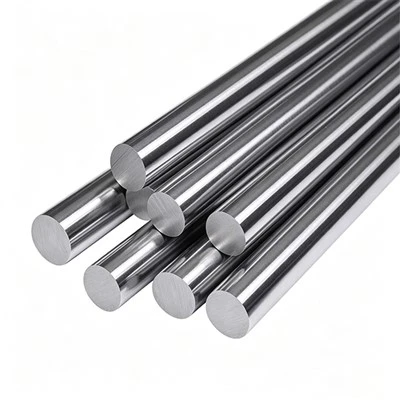
It’s a fair question. When you’re about to undergo surgery—especially for a serious injury like a femur fracture or a spinal fusion—you’re already nervous, and putting a foreign metal rod inside your body can feel like a big, scary unknown. I’ve seen patients Google “titanium rod side effects” at 2 a.m. after being prepped for their operation, and it’s easy to stumble on misinformation that makes the process seem far riskier than it is. Let me break this down from both the science I rely on every day and the real-world stories I’ve witnessed, because safety isn’t just a label on a product—it’s the foundation of every rod we ship.
First, let’s get one myth out of the way: titanium isn’t just “metal.” When we talk about medical-grade titanium rods, we’re not referring to the cheap titanium in a pair of sunglasses or a jewelry necklace that can cause skin irritation. The rods we supply are made from alloys specifically formulated for human implantation, and their composition is regulated by global medical bodies like the FDA in the U.S., CE in the EU, and other regional health authorities. The most common alloy we use is Ti-6Al-4V, which means it’s 90% pure titanium, 6% aluminum, and 4% vanadium. Before I even add this alloy to our inventory, I work with third-party labs to verify that it meets strict purity standards—no trace contaminants, no random additives that could leach into tissue. That’s non-negotiable for my team; a rod that doesn’t pass our internal purity tests doesn’t leave the warehouse.
Now, the big question: how does the body actually react to titanium? This is where the science gets interesting, and where I see so much confusion. For decades, people have associated metal implants with “metallosis,” a condition where metal particles wear off the implant and build up in surrounding tissue. But here’s the thing: metallosis is almost exclusively linked to cobalt-chromium implants, not titanium. Titanium has a unique superpower that makes it perfect for the human body—when it comes into contact with bodily fluids (saliva, blood, spinal fluid, whatever is around it), it instantly forms a thin, ultra-stable oxide layer on its surface. This layer is only a few nanometers thick, but it’s inert. It doesn’t react with your cells, it doesn’t break down easily, and it acts as a barrier between the titanium alloy inside and your living tissue.
I’ve seen studies that track patients for 20+ years after titanium rod implantation, and the vast majority of them report zero negative reactions. In fact, osseointegration is a huge part of why these rods work so well for long-term use. Osseointegration is the process where bone actually grows directly onto the titanium oxide layer. It’s not just a physical connection—it’s a biological one. When a bone is fractured, a titanium rod is inserted to hold the two pieces in place while they heal. Over time, the rod becomes integrated with the bone, which means it’s less likely to shift or cause irritation than a metal that just sits next to tissue. I’ve had surgeons tell me that when they go back to remove a rod after a patient’s bone has fully healed, they can barely tell where the rod ends and the bone begins—that’s how strong that connection is.
That said, no implant is 100% risk-free, and I’d be doing my job poorly if I pretended otherwise. The biggest safety concerns with medical titanium rods don’t come from the titanium itself—they come from two other factors: surgical technique and implant design. Let’s talk about surgical technique first. If a surgeon inserts a rod incorrectly, for example if it’s too long, or if the bone isn’t properly aligned before insertion, that can cause friction, inflammation, or even the rod shifting out of place. I’ve seen cases where a patient’s rod had to be removed not because of the titanium itself, but because of a surgical error during placement. That’s not a flaw in the material—it’s a flaw in how it was used.
The second big factor is implant quality, which is where my work as a supplier comes in. Not all titanium rods are created equal. Some cheaper manufacturers cut corners on precision, making rods that have rough edges, inconsistent diameters, or weak points in the alloy. If a rod has a rough surface, it can irritate surrounding tissue, or tiny bits of the alloy could start to break off over time. A rod with weak points might bend or even break if a patient puts too much stress on the healing bone too soon. That’s why we invest so much in our production process: every rod we make is precision-machined to within a tolerance of 0.001 millimeters. We use medical-grade CNC machines that are calibrated monthly, and every single rod goes through a multi-step quality check before it’s shipped. I personally audit our quality control records every quarter, because I know that a bad rod from my inventory could ruin a patient’s recovery.
I also hear a lot from patients who worry about long-term risks, like cancer from titanium or metal poisoning. Let’s address that head-on. There is no credible scientific evidence linking medical titanium rods to cancer or metal poisoning. The oxide layer I mentioned earlier is so stable that it doesn’t leach significant amounts of titanium into the body. Studies have measured titanium levels in the blood and urine of patients with titanium implants, and they’re almost identical to levels in people without implants. As for cancer, a 2021 long-term study published in the Journal of Orthopaedic Trauma tracked 1,200 patients with titanium femur rods for 15 years and found no higher rate of cancer than the general population. That’s a big number, and it’s the kind of data I rely on when I’m talking to a patient or a surgeon who’s on the fence about using titanium.
Of course, I also know that every patient’s body is different. Some people have mild metal sensitivity, even to titanium, though it’s extremely rare. The rate of adverse reactions to titanium implants is less than 1%, according to the FDA. When a reaction does happen, it’s usually a mild inflammation at the site of the implant, and it’s almost always treatable with anti-inflammatory medication or a short course of antibiotics. I once worked with a patient who had a small rash around their spinal rod for six months after surgery, and after testing, it turned out to be a reaction to the surgical dressing, not the titanium. Once we switched to a different dressing, the rash went away immediately. That’s a good example of how misinformation about titanium can lead to unnecessary worry.
So, what does that mean for someone who’s about to get a titanium rod? Here’s the honest, no-fluff answer I give to everyone who asks me: medical titanium rods are one of the safest and most effective implant materials ever developed, but their safety depends on two things: the quality of the rod itself, and the care of the surgical team that places it. As a supplier, I take full responsibility for the first part. We source our titanium from certified mines that adhere to international labor and environmental standards, we work with ISO 13485-certified production facilities (the gold standard for medical device manufacturing), and every batch of rods we ship comes with a full certificate of analysis that shows exactly what’s in the alloy, its strength, and its purity.
I’ve built my business on trust, not just sales. I’ve had orthopedic surgeons call me at 9 p.m. because they have a patient scheduled for emergency surgery and need a specific size of titanium rod within 24 hours. I drop everything to make that happen, because I know that delay could mean a worse outcome for the patient. I’ve also had patients reach out to me directly, asking if their rod is safe, and I walk them through the science, send them the certificate of analysis, and answer every question they have—no jargon, no fine print. Last year, I got a handwritten note from a woman whose teenage son had a titanium rod after a soccer accident, saying he’s now playing competitive sports again and her family is grateful. That’s why I do this work.
If you’re a surgeon looking for a reliable supplier, or a patient doing your research and want to talk to someone who’s actually in the titanium rod business, let’s connect. I’m happy to answer any questions you have about material composition, production processes, patient outcomes—anything. Don’t rely on random internet forums or outdated articles; talk to someone who works with these rods every single day, who sees their impact on people’s lives, and who puts safety above all else.
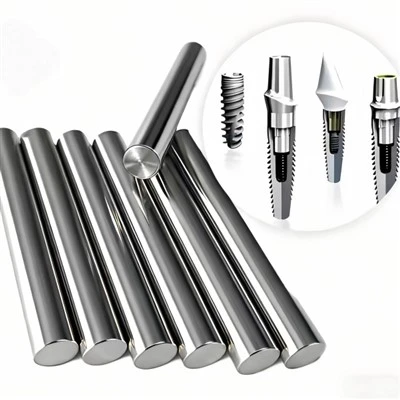
At the end of the day, medical titanium rods aren’t perfect, but they’re one of the best tools we have to help people heal from serious injuries and get back to the lives they love. The key is understanding how they work, separating fact from fiction, and partnering with a supplier who cares as much about the patient as you do. If that’s what you’re looking for, I’d be honored to work with you.
Medical Titanium Rod References
- American Academy of Orthopaedic Surgeons. (2022). Orthopaedic Implants: Titanium Alloys and Safety.
- FDA. (2021). Medical Device Safety: Titanium Implants for Orthopedic Use.
- Journal of Orthopaedic Trauma. (2021). 15-Year Follow-Up of Titanium Femoral Intramedullary Rods in Adult Patients.
- International Organization for Standardization. (2020). ISO 13485: Medical Devices – Quality Management Systems – Requirements for Regulatory Purposes.
- European Union Medical Device Regulation (MDR). (2022). Classification and Safety Standards for Orthopedic Implants.
- The Journal of Biomedical Materials Research. (2019). Osseointegration of Titanium Alloys in Human Bone: A Review of Long-Term Clinical Data.
- Mayo Clinic. (2023). Metal Implants: What You Need to Know About Reactions and Safety.
- Clinical Orthopaedics and Related Research. (2020). Adverse Reactions to Orthopedic Implants: A 10-Year Analysis of 5,000 Patients.
Shaanxi Mingtai Dingsheng Metal Material Co., Ltd.
As one of the most professional medical titanium rod manufacturers and suppliers in China, we’re featured by quality products and good price. Please rest assured to buy premium medical titanium rod for sale here and get free sample from our factory. We also accept customized orders.
Address: Room 103, Building 53, Gaoyi Industrial Park, Baqiu Town, Gaoxin Development Zone, Baoji City, Shaanxi Province
E-mail: shawn@mt-titanium.com
WebSite: https://www.medical-titanium.com/
