Ductility is a crucial mechanical property that significantly impacts the performance and reliability of various engineering components. As a supplier specializing in unequal length double end studs, understanding the ductility of these studs is essential for ensuring their quality and suitability for diverse applications. In this blog, we will explore what ductility means in the context of unequal length double end studs, its importance, and how it influences the overall performance of these fasteners. Unequal Length Double End Studs
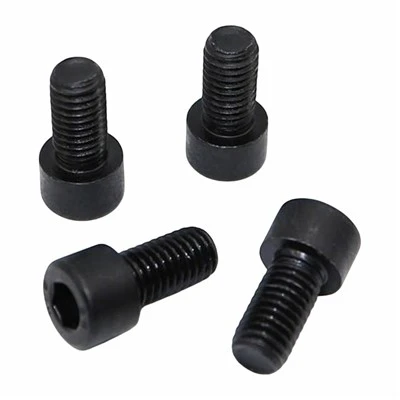
Understanding Ductility
Ductility refers to the ability of a material to deform plastically under tensile stress without fracturing. In simpler terms, it is the measure of how much a material can be stretched or drawn into a wire or elongated before it breaks. For unequal length double end studs, ductility is a vital characteristic as these studs are often subjected to tensile forces during installation and service.
When a double end stud is tightened, it experiences tensile stress as the two ends are pulled in opposite directions. A ductile stud can deform to a certain extent under this stress, redistributing the load and preventing sudden failure. This property is particularly important in applications where the studs are used to connect components that may experience relative movement or vibration over time.
Importance of Ductility in Unequal Length Double End Studs
Reliability and Safety
In critical applications such as automotive engines, aerospace structures, and industrial machinery, the reliability and safety of the components depend on the proper functioning of the fasteners. Ductile unequal length double end studs can withstand the dynamic loads and stresses encountered in these environments, reducing the risk of catastrophic failure. For example, in an automotive engine, the cylinder head bolts (which are a type of double end stud) must be able to maintain their integrity under high temperatures, pressures, and vibrations. A ductile stud can absorb the energy generated by these forces, preventing the bolts from breaking and potentially causing engine damage.
Ease of Installation
Ductility also plays a role in the ease of installation of unequal length double end studs. During installation, the studs are often tightened using torque wrenches, and some degree of plastic deformation is expected. A ductile stud can deform plastically without cracking or breaking, allowing it to be tightened to the specified torque without causing damage. This not only ensures proper installation but also saves time and effort during the assembly process.
Compatibility with Different Materials
Unequal length double end studs are often used to connect components made of different materials, such as steel and aluminum. The differences in the thermal expansion coefficients of these materials can cause relative movement between the components, leading to additional stresses on the studs. A ductile stud can accommodate this movement by deforming slightly, preventing the development of excessive stresses that could lead to failure.
Factors Affecting the Ductility of Unequal Length Double End Studs
Material Composition
The material composition of the stud is one of the primary factors that determine its ductility. Generally, steels with a higher carbon content tend to be less ductile than those with a lower carbon content. Alloying elements such as nickel, chromium, and molybdenum can also have a significant impact on the ductility of the steel. For example, adding nickel to steel can improve its ductility by increasing its toughness and resistance to cracking.
Heat Treatment
Heat treatment is another important factor that affects the ductility of unequal length double end studs. Annealing, normalizing, and tempering are common heat treatment processes used to improve the mechanical properties of steel. Annealing involves heating the steel to a specific temperature and then slowly cooling it to relieve internal stresses and improve ductility. Normalizing, on the other hand, involves heating the steel to a slightly higher temperature and then cooling it in air, which results in a more uniform microstructure and improved mechanical properties. Tempering is often performed after quenching to reduce the brittleness of the steel and increase its ductility.
Manufacturing Process
The manufacturing process used to produce the unequal length double end studs can also influence their ductility. Cold forming processes, such as thread rolling, can introduce residual stresses and work hardening in the stud, which can reduce its ductility. On the other hand, hot forging and machining processes can produce studs with a more uniform microstructure and better ductility.
Measuring the Ductility of Unequal Length Double End Studs
The ductility of unequal length double end studs can be measured using various methods, including tensile testing and bend testing.
Tensile Testing
Tensile testing is the most common method used to measure the ductility of materials. In a tensile test, a specimen of the stud is clamped at both ends and subjected to a gradually increasing tensile force until it breaks. The elongation of the specimen is measured during the test, and the percentage elongation at break is calculated. This percentage elongation is a measure of the ductility of the stud.
Bend Testing
Bend testing is another method used to evaluate the ductility of unequal length double end studs. In a bend test, the stud is placed between two supports and a load is applied at the center until the stud bends to a specified angle. The ability of the stud to bend without cracking or breaking is an indication of its ductility.
Applications of Ductile Unequal Length Double End Studs
Automotive Industry
In the automotive industry, ductile unequal length double end studs are used in various applications, such as engine blocks, cylinder heads, and transmission systems. These studs must be able to withstand the high temperatures, pressures, and vibrations encountered in automotive engines. Ductility ensures that the studs can maintain their integrity under these conditions, preventing engine failure and ensuring the reliability of the vehicle.
Aerospace Industry
The aerospace industry places high demands on the performance and reliability of fasteners. Ductile unequal length double end studs are used in aircraft engines, landing gear, and structural components. The ability of these studs to deform plastically under stress helps to absorb the energy generated by the dynamic loads and vibrations experienced during flight, ensuring the safety and reliability of the aircraft.
Industrial Machinery
In industrial machinery, ductile unequal length double end studs are used to connect various components, such as pumps, compressors, and motors. These studs must be able to withstand the high loads and vibrations generated by the machinery. Ductility allows the studs to adjust to the relative movement between the components, preventing the development of excessive stresses that could lead to failure.
Conclusion
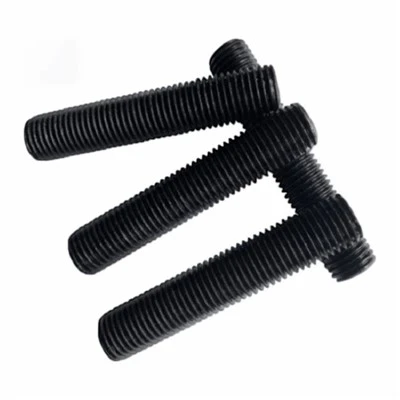
Ductility is a critical property of unequal length double end studs that affects their performance, reliability, and safety in various applications. As a supplier of these studs, we understand the importance of ensuring that our products have the right level of ductility to meet the needs of our customers. By carefully selecting the materials, applying appropriate heat treatment processes, and using advanced manufacturing techniques, we can produce high-quality unequal length double end studs with excellent ductility.
Stud Bolts If you are in need of high-quality unequal length double end studs with the right ductility for your specific application, we invite you to contact us to discuss your requirements. Our team of experts is ready to provide you with the best solutions and support.
References
- ASM Handbook Volume 1: Properties and Selection: Irons, Steels, and High-Performance Alloys
- Machinery’s Handbook, 31st Edition
- Standards for fasteners by International Organization for Standardization (ISO)
Handan Jihao Fastener Co., Ltd.
We’re known as one of the most professional unequal length double end studs manufacturers and suppliers in China. With abundant experience, we warmly welcome you to wholesale customized unequal length double end studs made in China here from our factory. If you have any enquiry about cooperation, please feel free to email us.
Address: A2, Row 31, Feiyu Screw World, Hebei Pu, Linmengguan Town, Yongnian District, Handan City, Hebei Province
E-mail: wenzhaona0@gmail.com
WebSite: https://www.chinaboltnut.com/
