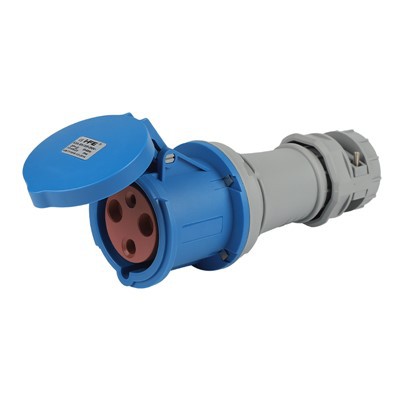
When it comes to the application of special sockets in high – altitude areas, there are a multitude of factors to consider. As a supplier of special sockets, I’ve been frequently approached with inquiries regarding the viability of using our products in such challenging environments. In this blog, I’ll delve into the scientific aspects, potential challenges, and the suitability of our special sockets for high – altitude applications. Special Socket
Understanding High – Altitude Environments
High – altitude areas are characterized by several distinct environmental factors that can have a significant impact on electrical equipment, including special sockets. The most prominent factors are low air pressure, low temperature, and high levels of ultraviolet (UV) radiation.
Low air pressure is one of the defining features of high – altitude areas. As altitude increases, the air density decreases, which means there are fewer air molecules per unit volume. This has implications for electrical insulation. In normal conditions, air acts as an insulator between electrical conductors. However, at high altitudes, the reduced air density can lead to a phenomenon known as "corona discharge." Corona discharge occurs when the electric field around a conductor is strong enough to ionize the surrounding air, creating a visible glow and potentially causing damage to the electrical equipment over time.
Low temperatures are also common in high – altitude regions. Cold temperatures can affect the mechanical properties of materials. For example, plastics and rubbers, which are often used in the construction of special sockets, can become brittle at low temperatures. This brittleness can lead to cracks and fractures, compromising the integrity of the socket and increasing the risk of electrical shorts or malfunctions.
High – altitude areas are also exposed to higher levels of UV radiation. The thinner atmosphere at high altitudes allows more UV rays to penetrate, which can cause degradation of the materials used in the socket. UV radiation can break down polymers, leading to discoloration, loss of mechanical strength, and reduced electrical insulation properties.
Design Features of Our Special Sockets
Our special sockets are designed with these high – altitude conditions in mind. To address the issue of low air pressure and corona discharge, we use advanced insulation materials. These materials have a higher dielectric strength compared to traditional materials, which means they can withstand higher electric fields without ionizing the surrounding air. This reduces the risk of corona discharge and ensures the long – term reliability of the socket.
In terms of low – temperature resistance, we have carefully selected materials for our sockets that maintain their flexibility and mechanical properties even at extremely cold temperatures. Our engineering team has conducted extensive testing in cold chambers to simulate high – altitude conditions. The sockets are made from a combination of polymers and elastomers that have been formulated to resist cold – induced brittleness. This ensures that the sockets can be installed and used without the risk of cracking or breaking due to low temperatures.
To combat the effects of UV radiation, we have incorporated UV – resistant additives into the materials used in the socket’s outer casing. These additives absorb and dissipate UV energy, preventing it from causing damage to the underlying polymers. As a result, our sockets can withstand prolonged exposure to high – altitude UV radiation without significant degradation.
Performance Testing in High – Altitude Simulations
We understand that theoretical design is not enough. That’s why we have invested in high – altitude simulation chambers to test the performance of our special sockets under realistic conditions. In these chambers, we can precisely control air pressure, temperature, and UV radiation levels to mimic high – altitude environments.
During the testing process, we subject the sockets to a series of electrical and mechanical tests. Electrical tests include measuring the insulation resistance, leakage current, and the occurrence of corona discharge. Mechanical tests involve checking for any signs of cracking, deformation, or loss of flexibility.
The results of our high – altitude simulations have been very promising. Our special sockets have consistently met or exceeded the performance requirements for high – altitude applications. The advanced insulation materials have effectively prevented corona discharge, even at extremely low air pressures. The low – temperature resistant materials have maintained their integrity, and the UV – resistant additives have protected the sockets from UV – induced degradation.
Case Studies: Real – World Applications
We have also had the opportunity to supply our special sockets for real – world high – altitude projects. One such project was a telecommunications station located at an altitude of over 4000 meters. The station required reliable electrical connections to ensure the continuous operation of its communication equipment.
Our special sockets were installed at the site, and they have been in operation for several years without any major issues. The station’s maintenance team has reported that the sockets have withstood the harsh high – altitude conditions, including extreme cold, low air pressure, and high UV radiation. The advanced design features of our sockets have contributed to the overall reliability and stability of the electrical system at the telecommunications station.
Another case study involves a scientific research facility in a high – altitude mountain region. The facility required specialized electrical sockets for its sensitive research equipment. Our special sockets were chosen for their high – performance and reliability. Since their installation, the sockets have provided a stable electrical connection, ensuring the accurate operation of the research equipment.
Advantages of Choosing Our Special Sockets for High – Altitude Areas
There are several advantages to choosing our special sockets for high – altitude applications. Firstly, our sockets are designed and tested specifically to meet the unique challenges of high – altitude environments. This means you can have confidence in their performance and reliability, reducing the risk of electrical failures and downtime.
Secondly, our sockets offer long – term cost savings. The advanced materials and design features used in our sockets result in a longer lifespan compared to traditional sockets. This reduces the need for frequent replacements, saving you both time and money in the long run.
Finally, our commitment to quality and customer service sets us apart. We work closely with our customers to understand their specific requirements and provide customized solutions if necessary. Our technical support team is always available to answer any questions and provide assistance during the installation and operation of our sockets.
Conclusion and Call to Action

In conclusion, our special sockets are well – suited for high – altitude areas. Through advanced design, rigorous testing, and real – world applications, we have proven that our sockets can withstand the harsh conditions of high – altitude environments. Whether you are involved in telecommunications, scientific research, or any other industry that requires reliable electrical connections at high altitudes, our special sockets are the ideal choice.
Wall Mount Industrial Socket If you are interested in learning more about our special sockets or would like to discuss a potential purchase, please feel free to contact us. We are eager to engage in a productive conversation with you and explore how our products can meet your specific needs.
References
- Electrical Insulation Handbook, McGraw – Hill
- Handbook of Polymers in Engineering, Wiley – Interscience
- High – Altitude Environmental Effects on Electrical Equipment, IEEE Publications
Zhejiang Hefeng Electric Co., Ltd.
Address: Wenzhou Daqiao Industrail Park, Beibaixiang Town, Yueqing City, Zhejiang Province, China
E-mail: hefengplug@chinahfe.com
WebSite: https://www.hfcee.com/
