In the highly competitive world of retail, every detail matters when it comes to attracting customers and driving sales. One crucial element that often gets overlooked is the angle of a cardboard countertop display. As a supplier of cardboard countertop displays, I’ve witnessed firsthand the impact that the right angle can have on visibility and, ultimately, the success of a product. In this blog post, I’ll delve into the science behind finding the best angle for a cardboard countertop display to maximize visibility. Cardboard Countertop Display

Understanding the Human Field of Vision
To determine the optimal angle for a cardboard countertop display, we first need to understand the human field of vision. The human eye has a horizontal field of view of approximately 180 degrees and a vertical field of view of about 135 degrees. However, the area of sharpest focus, known as the foveal vision, is much smaller, covering only about 2-5 degrees. This means that to capture a customer’s attention, a display should be positioned within their foveal or near-foveal vision.
When a customer approaches a counter, their line of sight is typically downward at an angle. Studies have shown that the average downward angle of a person’s gaze when looking at a countertop is around 15-30 degrees. Therefore, a cardboard countertop display should be angled to align with this natural line of sight to ensure maximum visibility.
The Impact of Angle on Readability
Another important factor to consider is the readability of the information on the display. If the angle is too steep, the text and graphics on the display may be difficult to read, especially from a distance. On the other hand, if the angle is too shallow, the display may blend in with the countertop and fail to stand out.
Research has shown that an angle of 30-45 degrees is generally optimal for readability. At this angle, the text and graphics on the display are easy to read from a normal viewing distance, while still being prominent enough to catch the customer’s eye. This angle also allows for a good balance between the visibility of the front and side panels of the display, ensuring that all the information is accessible to the customer.
Factors Affecting the Optimal Angle
While the 30-45 degree angle is a good starting point, there are several factors that can affect the optimal angle for a specific cardboard countertop display. These factors include:
- Location of the display: The location of the display within the store can have a significant impact on the optimal angle. For example, if the display is placed near a busy aisle, it may need to be angled more vertically to ensure that it is visible from a greater distance. On the other hand, if the display is placed in a corner or a less-trafficked area, a more horizontal angle may be more appropriate.
- Height of the countertop: The height of the countertop can also affect the optimal angle. If the countertop is relatively low, a steeper angle may be needed to ensure that the display is visible from a standing position. Conversely, if the countertop is high, a shallower angle may be more effective.
- Size and shape of the display: The size and shape of the display can also influence the optimal angle. Larger displays may require a more vertical angle to ensure that all the information is visible, while smaller displays may be more effective at a shallower angle. Additionally, displays with irregular shapes may need to be angled differently to maximize visibility.
Testing and Optimization
To determine the best angle for a specific cardboard countertop display, it’s important to conduct testing and optimization. This can involve setting up the display in a real-world retail environment and observing how customers interact with it. By collecting data on customer behavior, such as the amount of time they spend looking at the display and the number of purchases made, you can determine the optimal angle for maximum visibility and sales.
One effective way to test different angles is to use a protractor to measure the angle of the display and then adjust it accordingly. You can also use video cameras to record customer behavior and analyze the data to identify patterns and trends. By testing different angles and analyzing the results, you can fine-tune the display to ensure that it is as effective as possible.
Conclusion
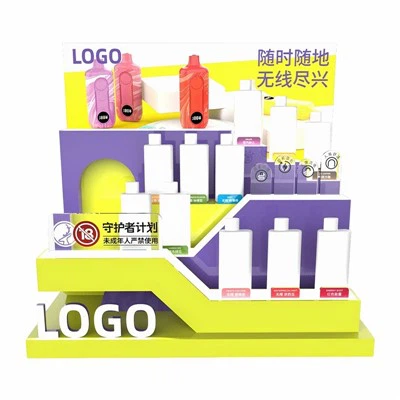
In conclusion, finding the best angle for a cardboard countertop display is crucial for maximizing visibility and driving sales. By understanding the human field of vision, the impact of angle on readability, and the factors that affect the optimal angle, you can design and position your displays to attract customers and increase sales. As a supplier of cardboard countertop displays, I’m committed to helping my clients create effective displays that stand out in the crowded retail environment.
Tabletop Display Stand If you’re interested in learning more about how to optimize the angle of your cardboard countertop displays or if you’re looking for a reliable supplier of high-quality displays, please don’t hesitate to contact me. I’d be happy to discuss your specific needs and provide you with a customized solution that meets your requirements.
References
- Ware, C. (2012). Information Visualization: Perception for Design. Morgan Kaufmann.
- Spence, I. (2007). Information Visualization: Design for Interaction. Pearson Education.
- Tufte, E. R. (2001). The Visual Display of Quantitative Information. Graphics Press.
Guangzhou Guangjie Display Products Manufacturing Co., Ltd.
We’re well-known as one of the leading cardboard countertop display manufacturers in China, also support customized service. Welcome to buy bulk high quality cardboard countertop display at competitive price from our factory. If you have any enquiry about pricelist and quotation, please feel free to email us.
Address: No. 16-1 Lilv Road, Dashi Street, Panyu District, Guangzhou City, Guangdong Province
E-mail: guangjie_dp888@163.com
WebSite: https://www.gjdisplaystand.com/
