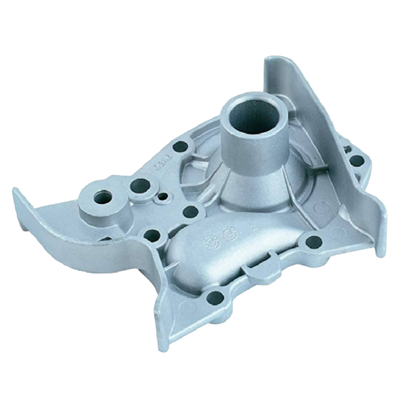
Hey there! I’m a supplier of cast parts, and today I wanna chat about the heat treatment methods for cast parts. Heat treatment is a crucial step in the manufacturing process of cast parts. It can significantly improve the mechanical properties, such as hardness, strength, toughness, and wear resistance of the castings. Let’s dig into the different heat treatment methods one by one. Cast Parts
Annealing
Annealing is one of the most common heat treatment methods for cast parts. The main purpose of annealing is to relieve internal stresses, improve the machinability of the castings, and refine the grain structure.
There are several types of annealing. Full annealing is usually used for cast parts made of carbon steel. In this process, the castings are heated to a temperature above the critical point, held there for a certain period to allow the formation of a uniform austenite structure, and then slowly cooled in the furnace. This slow cooling helps to achieve a soft and ductile structure.
Another type is stress – relief annealing. Casting processes often generate internal stresses due to uneven cooling. Stress – relief annealing involves heating the cast parts to a relatively low temperature (usually below the critical point), holding them at that temperature for a while, and then cooling them slowly. This can effectively reduce the internal stresses and prevent the castings from cracking or deforming during subsequent machining or use.
For example, when we produce large – scale cast iron parts, stress – relief annealing is a must – do step. After casting, these parts have a lot of internal stresses. If we don’t relieve them, the parts may crack during machining or even in normal use.
Normalizing
Normalizing is similar to annealing, but with a faster cooling rate. The cast parts are heated to a temperature above the critical point and then cooled in air. This results in a finer grain structure compared to annealing.
Normalizing is often used to improve the strength and hardness of cast parts. It can also make the mechanical properties of the castings more uniform. For instance, for some medium – carbon steel castings, normalizing can enhance their strength and toughness, making them more suitable for applications where high – strength materials are required.
One of the advantages of normalizing is that it is a relatively simple and cost – effective process. It doesn’t require a long – time furnace cooling like full annealing, which saves both time and energy.
Quenching
Quenching is a heat treatment method that involves heating the cast parts to a high temperature and then rapidly cooling them in a quenching medium, such as water, oil, or polymer solutions. The rapid cooling rate causes the formation of a hard and brittle martensite structure.
Quenching can significantly increase the hardness and strength of the cast parts. However, it also generates a large amount of internal stresses, which may lead to cracking if not properly managed. That’s why quenching is often followed by tempering.
For example, in the production of high – strength cast steel parts like gears and shafts, quenching is a key step. The high hardness obtained through quenching allows these parts to withstand high – load applications. But we have to be very careful with the quenching process. The choice of quenching medium is crucial. Water quenching provides a very fast cooling rate, but it may cause severe cracking in some cases. Oil quenching is a bit slower but can reduce the risk of cracking.
Tempering
Tempering is always performed after quenching. The purpose of tempering is to relieve the internal stresses generated during quenching, reduce the brittleness of the martensite structure, and improve the toughness of the cast parts.
There are different tempering temperatures, which can result in different mechanical properties. Low – temperature tempering (usually around 150 – 250°C) is mainly used to relieve internal stresses and slightly improve the toughness while maintaining a high hardness. Medium – temperature tempering (around 350 – 500°C) can increase the toughness significantly and also reduce the hardness to some extent. High – temperature tempering (above 500°C) is often used to obtain a good combination of strength and toughness.
For example, after quenching a cast steel part, if we want to use it in a high – impact application, we may choose medium – or high – temperature tempering to ensure that the part has enough toughness to withstand the impact.
Austempering
Austempering is a special heat treatment method. In this process, the cast parts are heated to a high temperature to form austenite and then quenched into a salt bath at a temperature above the martensite start temperature. The parts are held in the salt bath for a certain period to allow the transformation of austenite into bainite.
Austempering can produce cast parts with high strength, good toughness, and low internal stresses. It is especially suitable for castings that require a combination of these properties. For example, some automotive cast parts, like crankshafts, can benefit from austempering. The bainite structure obtained through austempering provides excellent mechanical properties, which can improve the performance and service life of these parts.
Martempering
Martempering is also a quenching – related heat treatment method. The cast parts are heated to the austenitizing temperature and then quenched into a medium (usually a salt bath) at a temperature just above the martensite start temperature. They are held in this medium until the temperature throughout the part is uniform and then cooled to room temperature in air.
Martempering can reduce the internal stresses generated during quenching compared to normal quenching. This helps to prevent cracking and distortion of the cast parts. It is often used for cast parts with complex shapes or those that are prone to cracking during normal quenching.
Case Hardening
Case hardening is a heat treatment method that is used to harden only the surface layer of the cast parts while keeping the core soft and tough. There are two main types of case hardening: carburizing and nitriding.
Carburizing involves heating the cast parts in a carbon – rich environment (such as a gas or liquid carburizing medium) at a high temperature. Carbon atoms diffuse into the surface layer of the castings, increasing the carbon content in this layer. After carburizing, the parts are usually quenched and tempered to obtain a hard surface layer and a tough core.
Nitriding, on the other hand, involves heating the cast parts in a nitrogen – rich environment. Nitrogen atoms diffuse into the surface layer, forming hard nitride compounds. Nitriding can improve the wear resistance, corrosion resistance, and fatigue strength of the cast parts. It is often used for cast parts that are exposed to harsh working conditions, such as gears and bearings.
As a cast parts supplier, we have a lot of experience in applying these heat treatment methods. We know how to choose the right heat treatment method according to the material of the cast parts, the required mechanical properties, and the specific application. Whether you need a high – strength cast steel part or a ductile cast iron part with good machinability, we can use the appropriate heat treatment to meet your needs.

If you’re in the market for high – quality cast parts and want to discuss how the right heat treatment can improve the performance of your products, feel free to reach out to us. We’re always ready to have a chat and see how we can work together to get you the best cast parts for your projects.
Stamped Brackets References:
- Metals Handbook: Heat Treating, ASM International
- Casting, Forming and Welding: Processes and Materials, Pearson Education
Hangzhou Zhalihui Import And Export Co., Ltd.
We are one of the most experienced cast parts manufacturers and suppliers in China, specialized in providing high quality customized products. Please feel free to buy discount cast parts in stock here from our factory. Contact us for quotation.
Address: Room 2801, Building 2, Taifu Plaza, No.17, Tonghui Middle Road, Chengxiang Street, Xiaoshan, Hangzhou, Zhejiang
E-mail: Chars_1979@hotmail.com
WebSite: https://www.zhalihui.com/
